
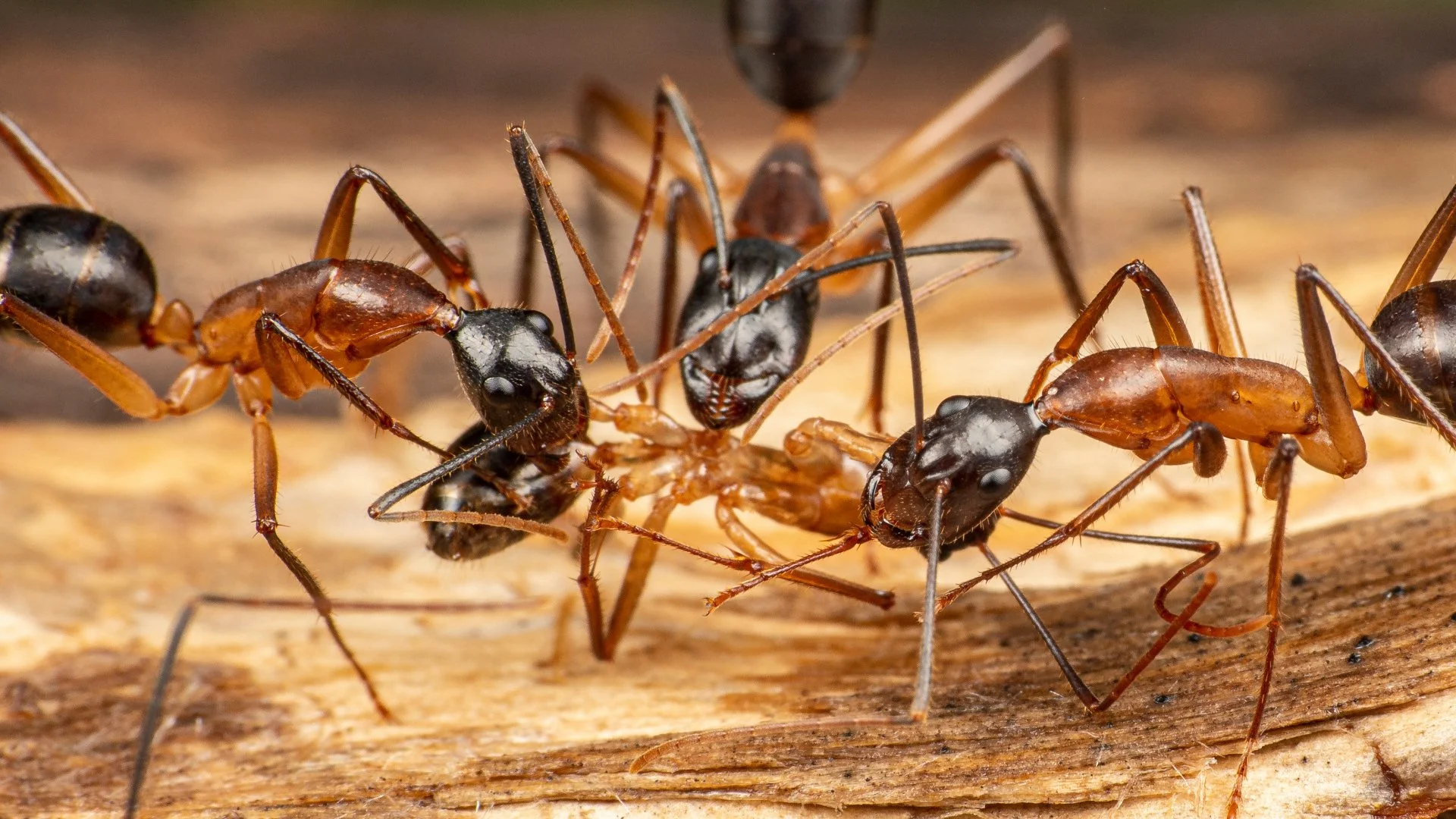
Fire ants and carpenter ants are common critters found in yards in Texas. While they may seem similar at a glance, they are distinctly different from each other. Fire ants and carpenter ants are distinct in appearance, nesting, and behavior. Fire ants are smaller, reddish-brown, and deliver painful, aggressive stings. They build large mounds in sunny areas.
On the other hand, carpenter ants are larger, often black or red, with a heart-shaped head and smooth thorax. They nest in wood, causing potential structural damage, and are less aggressive. Fire ants pose immediate health risks through stings, while carpenter ants are a long-term structural threat due to their nesting habits in moist, wooden areas.
Fire ants and carpenter ants differ in appearance.
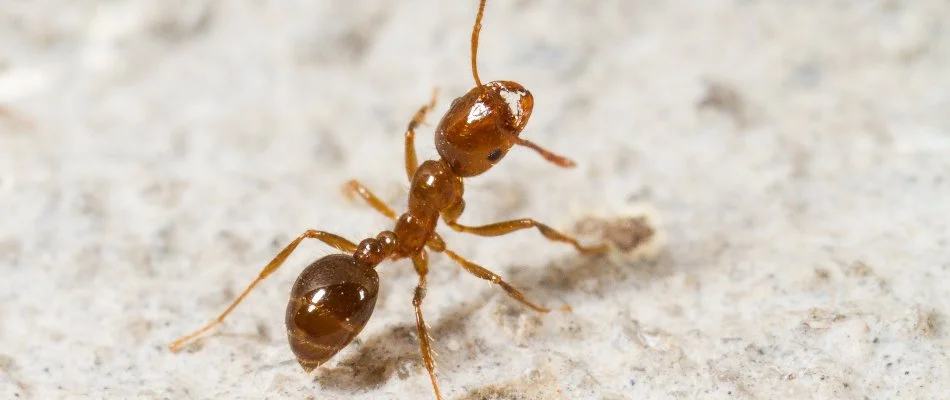
Recognizing fire ants and carpenter ants begins with noting their physical differences. Fire ants are typically smaller, measuring about 1/8 to 3/8 inches in length. They are reddish-brown, and their bodies have a noticeably glossy appearance. One characteristic feature of fire ants is their burning sting, which is a result of their aggressive nature when disturbed. Their antennae are elbowed, with a club of three segments.
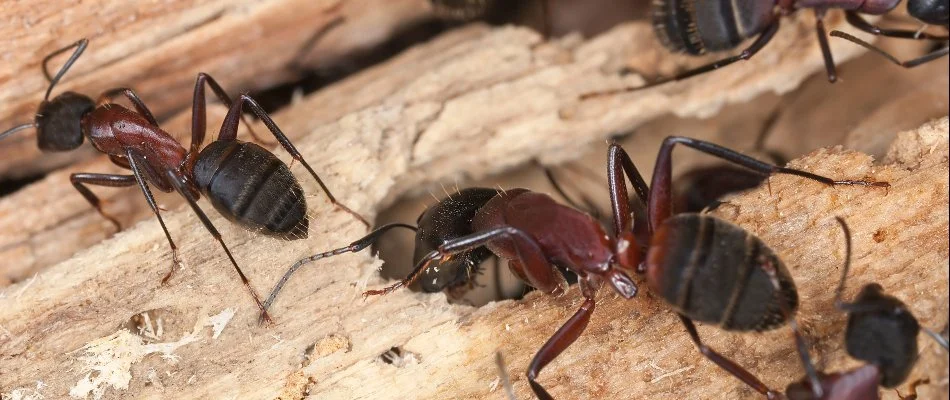
Carpenter ants are larger, usually ranging from 1/4 to 1/2 inches long. They can be black, red, or a combination of both colors. Unlike fire ants, carpenter ants have a distinct heart-shaped head and a smooth, rounded thorax. Their antennae are also elbowed but have a simple, single-segment club. While they don’t sting, carpenter ants can bite and spray formic acid as a defensive measure.
The nesting spots of fire ants and carpenter ants are distinct from each other.
The nesting habits of fire ants and carpenter ants are quite distinct, which can help in identifying an infestation. Fire ants are known for building large mounds in open areas like lawns, fields, and near foundations. These mounds can reach up to 18 inches in height and have no visible opening. Fire ants prefer sunny environments, and their nests can house thousands of ants, making them quite extensive.
Carpenter ants, in contrast, are more discreet in their nesting. They prefer wood and can often be found in dead trees, logs, or even within the wooden structures of homes. Unlike termites, they don’t eat wood; instead, they excavate it to build their nests. This can lead to structural damage over time. Carpenter ant nests are typically found indoors in hollow doors, insulation, and wooden beams, where moisture is present.
Fire ants and carpenter ants have different behaviors.

Behaviorally, fire ants and carpenter ants differ significantly, especially in terms of their interactions and threats to humans and property. Fire ants are highly aggressive and known for their painful stings. They swarm quickly when their nests are disturbed, posing a risk to humans and animals. Their stings can cause allergic reactions in sensitive individuals, making them a health concern.
Carpenter ants are less aggressive but can still be problematic. They are primarily nocturnal and forage for food, which often includes sweets and proteins. While they don’t pose a direct health risk to humans, their habit of nesting in wood can lead to significant structural damage over time if left unchecked.
Call us today to sign up for our fire ant control service!
If fire ants are causing problems on your property, we're here to help. Here at Dr. Tex Lawn & Pest, we offer a fire ant control service that involves applying a granular treatment on your lawn and landscape beds to target ants where they can be found. The treatment we use is long-lasting, providing effective protection for up to 8 months.
Our team provides our fire ant control service to commercial and residential properties, along with HOAs, in Austin, Round Rock, Cedar Park, Pflugerville, TX, and nearby communities. Give us a call today at (512) 717-5071 to sign up!

Comments (0)
Thanks for your comment!
Thanks for your feedback! Your comments have been successfully submitted! Please note, all comments require admin approval prior to display.
Error submitting comment!
There is a problem with your comment, please see below and try again.